Category:
Data Visualization, Media.
Client:
Mayank Loonker
Visualizing the Steam Game Landscape
Data Visualization, Media.
Visualizing the Steam Game Landscape: A Data-Driven Exploration of Game Length vs Review Quality
In this project, I analyzed a 2023 dataset from Steam to understand the relationship between game duration and critical review scores. The goal was to uncover patterns indicating how the time taken to complete a game correlates with its quality, and whether certain durations are more likely to host high or low-effort games.
Data Cleaning & Preparation

The raw data required extensive cleaning before any meaningful visualization could begin. I handled:
Missing values in review scores and playtime.
Outliers, such as games with unusually high or low completion times.
Normalization of fields like
to_beat_mainandmetacritic_ratingfor consistency.
This step ensured the data was reliable for pattern discovery and visual representation.
Visual Exploration & Iteration
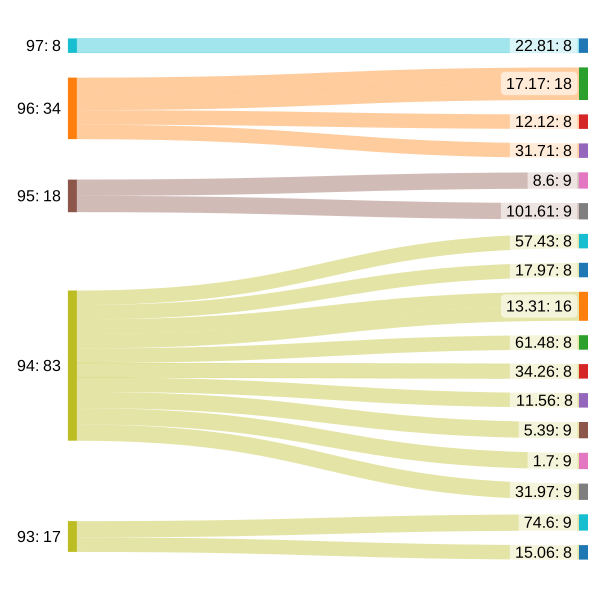
To explore the data, I created several iterations of scatter plots using tools like Datawrapper and manual SVG compositions:
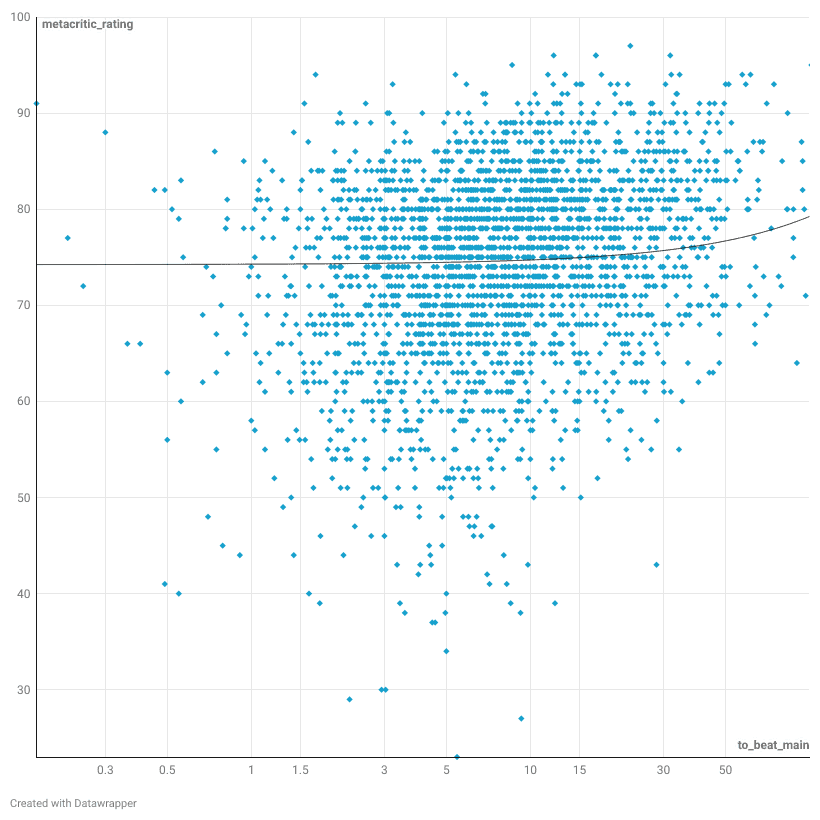
Initial Scatter Plot: Plotted
to_beat_mainvsmetacritic_rating, which revealed that shorter games tend to have lower review scores.Logarithmic and Grid Visualizations: Helped expose density clusters, especially between the 1–10 hour range where game volume was highest.
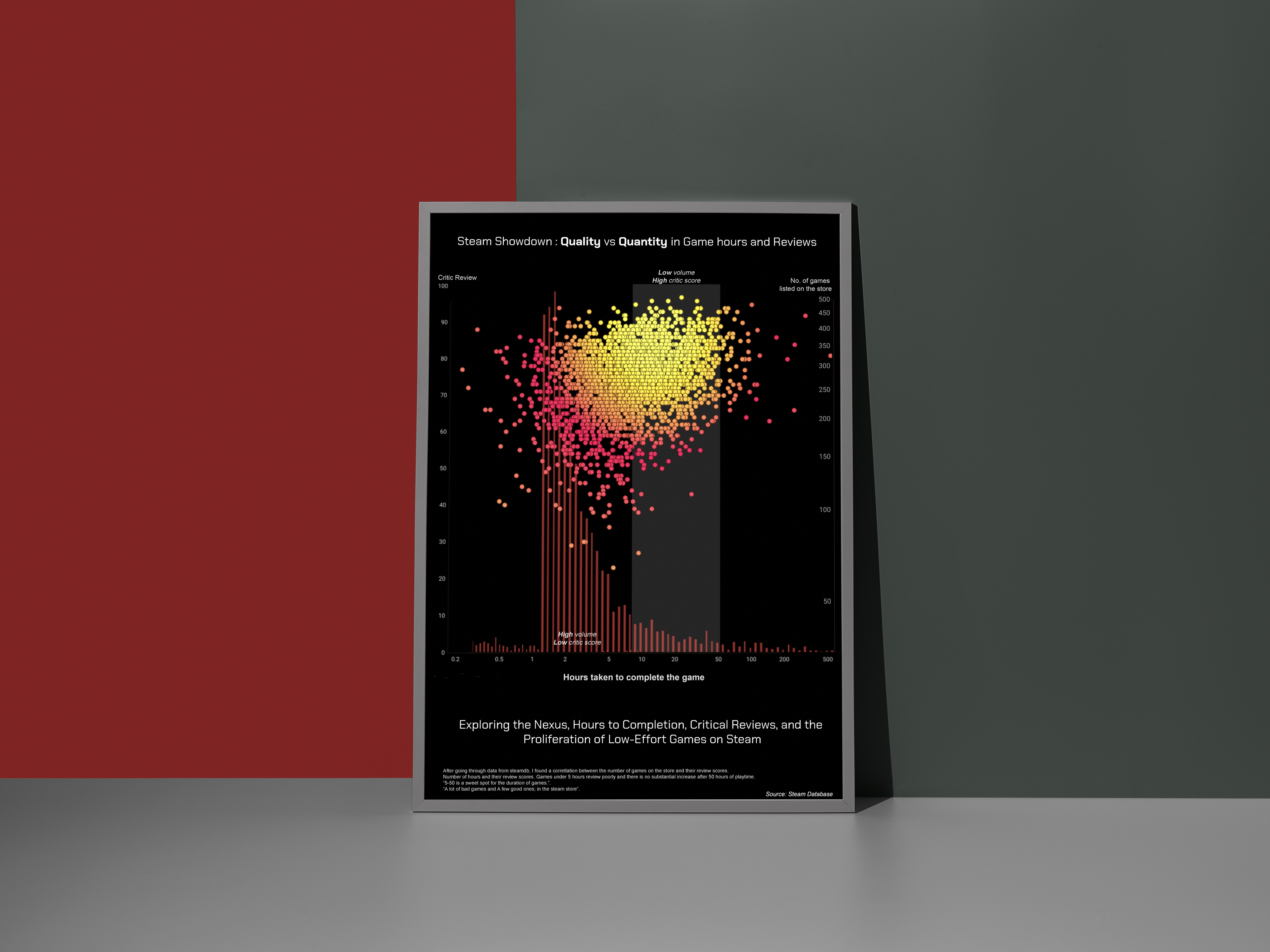
Refined Density Heat Map: Evolved from scatter plots to a heatmap-like visual, merging histogram data and score clusters. This visualization clearly shows a large volume of poorly rated short games flooding the Steam store, while well-rated games (especially those in the 5–50 hour range) are relatively scarce.
Key Insight
There is a "sweet spot" in game design: 5–50 hours appears to be the optimal duration for critically acclaimed games. Games under 5 hours tend to receive lower reviews, likely due to lack of depth or polish, while longer games (>50 hours) show diminishing returns in review score.
This visualization project highlights the importance of thoughtful game design and how data can expose underlying industry trends, such as the proliferation of low-effort content in digital marketplaces.